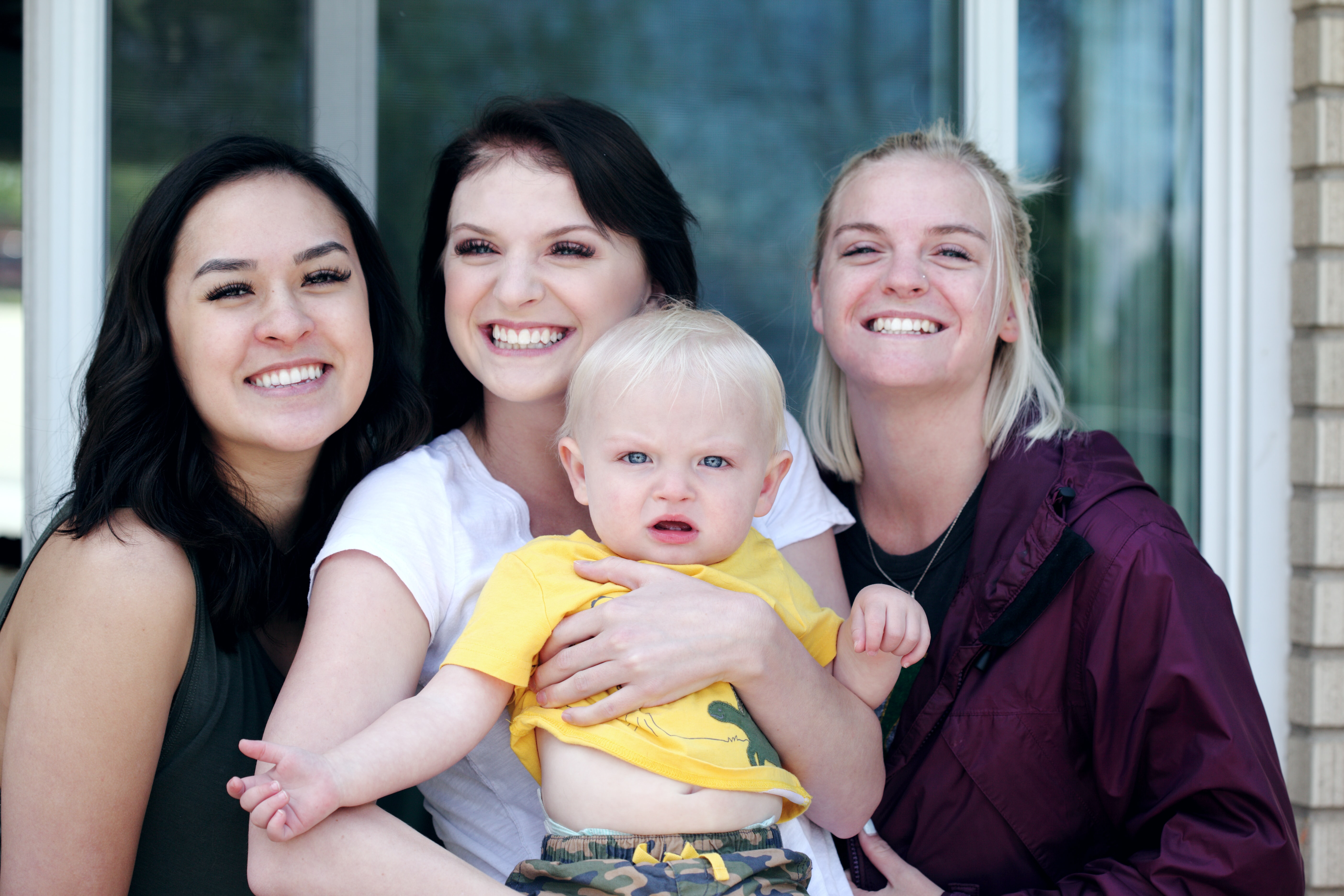
A few months ago, I read the results of an October 2022 Study Conducted by Everyday Health Group that was incredibly disheartening. The study, which questioned women aged 18-54 who were pregnant or had at least one child under the age of eight (Gen X, Millennial, and Gen Z moms), found that nearly seventy percent of these young moms are struggling with anxiety. Seventy percent. And this wasn’t just a little nudge at the back of their minds; a third of them described their anxiety as moderate or severe.
What are they worried about? Their kids, of course. Sixty-eight percent worried about their child’s developmental progress, things like whether they’re meeting milestones appropriately and whether they’re succeeding in school. Almost that same number indicated they were stretched too thin, feeling pressure to spend more time at home to support and guide their children both developmentally and emotionally.
This is obviously a terrible situation for both moms and kids and it raises an urgent question: what kind of support are these moms getting as they raise the next generation? The surveyors framed this question in terms of the oft-quoted African proverb: it takes a village to raise a child. They asked these beleaguered moms if their villages were helping them to raise their children. Defining their “village” as family and friends, seventy-five percent said they are not getting enough support. But what was truly tragic, fifty-one percent said that, beyond themselves and their partners, they have no “village” at all to lean on for help raising their children.
It Takes a Village to Raise a Child, Yet the Majority of Moms Across the Country Feel Villageless
These families are suffering, and I believe we would be wise to embrace the undeniable truth of this ancient proverb as soon and as fully as possible. It does take a village to raise a child, and we are all the village. The proverb speaks to the enormous, diligent, and consequential effort that must go into raising every single child. It warns young parents that the job is bigger than they can do alone and encourages them to seek and accept the help of the village. And, finally, it reminds the village – us – that we are all responsible for the care and keeping of the village children.
I’d like to take that last point first and apologize to all the younger moms out there whose experiences are reflected in these study results. You should not have to build your own village while you’re trying to raise young children. The village should have been there waiting for you when the babies came. I’m so sorry it wasn’t. One of the reasons I started this blog was to change that, to encourage moms like myself, who are past the daily fray of diapers and homework, to take up their mantels as women of the village, to offer their younger counterparts the support, guidance, and comfort they need to raise good and happy children. I’m going to keep working on that and I’ll let you know how I make out.
In the meantime, I’m sorry to say it moms, but if your village seems a little sparce or – God forbid – empty, you’re going to have to take some deliberate, proactive steps to begin filling it back up.
If You’re Among Them, You Will Need to Create a Village of Your Own
I think the village analogy is really apt when it comes to raising children because it encompasses the two things that are absolutely crucial to both parents and their kids: practical help with the physical and psychological demands of parenting, and the sense of peace, trust and security that comes with belonging to a larger community. That sense of “belonging” is so important and nuanced that I’m going to give it its own post. For the moment, I’d like to focus on the real life, day-to-day necessity of having a village to help you raise your kids.
If you are surrounded by family and friends who can share as many moments as possible with you and your children, I hope you marvel at how blessed you are. You might even question whether you need to expand your village at all. Let me suggest that you do. Whatever primordial village spawned the proverb was likely filled with families and friends, yet the ancients laid the credit and the responsibility for child-rearing at the feet of the whole village. I think they were telling us that the job of parenting is enormous, immediate, and unpredictable and, to do it well, we all need to trust and lean on – and teach our children to trust and lean on – people outside our immediate circles.
If you’re not blessed with parents and siblings and cousins and friends who live locally and are willing and able to help you raise your child, know you’re not alone. In fact, as the Everyday Health study attests, you are in the majority, and there’s a ray of sunshine in that. It means that, whether you realize it or not, there are a whole lot of other moms and families out there just like you, looking to build a village.
These are the People You Should Invite into Your Village
To get started, the first question you need to ask yourself, I think, is who are you looking to bring into your village? This isn’t about building friends, per se, though I’m certain long-term friendships will grow out of it. It’s about wrapping yourself and your children in a cocoon of people you trust and who are willing to help you with this monumental task of raising a good, healthy, happy human being.
Of course, you’ll need a couple of professionals. A pediatrician you trust is absolutely essential. And whether you’re working full time, part time, or investing all of your energy at home, you will need a trusted care giver if you hope to make it through parenting with any of your adult relationships – or sanity – intact. Depending on your child’s age, a knowledgeable preschool or elementary school teacher is an invaluable addition.
But your village really needs to extend beyond these must-haves to include a host of soft, unscripted connections. The neighbor who keeps a spare key to your place and can watch the kids when you need to take your mom to the doctor. The stay-at-home friend who’s willing to be your emergency contact for school. The co-worker who’s willing to pick up the slack when you need to scooch out of work a little early to make the ballet recital. The mom in your son’s class who’s happy to drop him at soccer when you’re tied up at work. The friend-of-a-friend whose daughter also had night terrors/reading issues/mono and is happy to talk to you about how they got through it. The preschool teacher who wants you to know that her grandson struggled with just the exact same trouble as your son is having and he’s fine now, so don’t worry yourself. The single friend who would love to spend Saturday afternoon with your daughter while you rest and refill.
These are the people you need to be looking for, reaching out to, and drawing into your village.
You Should Start Connecting with These People as Soon as Possible by . . .
So, when to start? Ideally, your village would predate your baby, so that during those first few exhausting, tumultuous months of momming you feel carried and cared for. But the reality is that, aside from the pediatrician and possibly the day care, few women even realize they need a village until they’re already in the thick of it. If that’s you, no worries. Sooner is better, but it’s never too late.
The big question, of course, is how to do it. This is less of a mystery than a challenge. You’re going to have to invest time when I know time is in short supply. You’re going to have to reach out, seek out, be vulnerable, and possibly face a little rejection or a tough crowd at times. Deep breath. Remember it’s worth it.
Examining the Relationships You Already Have . . .
The first step is to look to the relationships you already have to see if any of them might be a source of physical or emotional support for you. A good friend from work with a toddler at home. A sister who will send you takeout on a bad day. A girl from the neighborhood who’s majoring in early childhood education and would love to earn some extra cash. Reach out to them. Vibe the rapport. Or be explicit. Tell them, “Hey, this momming thing is really hard and sometimes I need help. Would it be ok if I reached out to you on occasion?”
Becoming an Active and Involved Neighbor . . .
Next, imbed yourself in your neighborhood. I would argue that it’s always important to know and have at least some sort of connection with your neighbors. They are your most immediate community. Invite them to a cookout. Stop and chat when you run into them on walks or at the grocery. I’ve always made a point to bring a basket of muffins or brownies to a new neighbor as soon as they move in. I tuck in a little note with my name, phone number, and address on it so they know at least one neighbor and I know one more. Growing up surrounded by people they know is incredibly healthy for your kids and can be life support for you.
Trust me. At least one, ideally several, of your neighbors should be in your village.
Interacting with Other Parents as Often and Regularly as Possible . . .
Online groups, Facebook, and blogs are great places to find a little advice or information – your virtual village – but nothing takes the place of IRL interaction. When my kids were little, a couple of the moms in our neighborhood got together and started a playgroup. It went on for years. Every Tuesday morning eight to ten moms and anywhere from twelve to twenty kids would meet at one of our houses for snacks, playtime and mutual mom support. There was a point in my life when I absolutely lived for Tuesday mornings.
These regular connections naturally lead to other ones. “What preschools are you looking at?” “Me too. Maybe we should carpool.” “I have load of baby girl clothes. I’ll bring them next week.”
If a playgroup isn’t your thing, look to see if there’s any regular parenting events at your community center. Ask if there’s a mommy-and-me group at your church or place of worship. See if your neighborhood has a community page online (or start one) and get active. Chat up the moms at your kids’ soccer games and art classes and swimming lessons. Be a regular at your local parks and sidle up to the familiar faces.
Volunteer at your child’s school. I’m going to say that one again: volunteer at your child’s school. It’s the brick and mortar of village-building.
And Remembering that it Takes Time, Effort and Patience to Build a Village
The key to all of this is regularity. One and done does not a village build. You’ll need to see the same faces, time after time. Get to know one another in a relaxed and natural way. Then thoughtfully and intentionally select and cultivate relationships with the people you feel have something to offer you, maybe people you feel you have something to offer to, too. Advice. Help. Sympathy. Experience. A ride. A meal. A shoulder.
Know that it takes effort and that everyone feels a little vulnerable and awkward putting themselves out there. So be patient. Rome wasn’t built in a day, and your village won’t be either. But if you commit the time and energy, I think you’ll be thrilled with what you create. A safe, happy, relaxed place filled with people to trust, people to learn from, and people to lean on. That’s what it takes to raise a child.
2 responses to “Village Building: Bricks and Mortar”
[…] Over the next several weeks and months, I plan to research and give some thought to how I and mine built our villages back in the day. I’ll share what I come up with in the hope that it will be helpful. […]
[…] (I don’t think I’m spoiling the surprise when I spill that one.) My particular concern is what that sense of disconnectedness is doing to young moms and what that means for our next generation. Knowing how much my network of moms helped me – peer […]