Max was about nine. I had just yelled at somebody for something and found her waiting in my room, tearful.
“I wish I lived at the Bartniki’s,” she said quietly.
Almost all of my kids have made periodic requests to be relocated to another family. Apparently, in other families, no one does homework, everyone has a puppy, and family meals toggle exclusively between chicken nuggets, pizza, and Captain Crunch. So it’s a pretty understandable ask.
But not Max. She was – and still is – one of the kindest, most earnest, most sincere people I’ve ever met, and my eyes filled with tears.
“Why?” I asked.
“Because in their house, nobody yells.”
I made an excuse to leave the room before I puddled out onto the floor. I wasn’t upset because of what Max had said. I was upset because it was true. I’m a yeller. Not a Karen. Not a raving at busses on the street corner yeller. A mom yeller. As in, “Get in the car RIGHT NOW!” And “I’m not explaining this to you again. JUST DO IT!”
I know. I know. My temper is maybe my least favorite thing about myself. Try as I do to work against it, though, my tendency to yell has proven a very intractable failing. And as I admit it to you – especially in these new age, gentle parenting, make-sure-your-child-is-intrinsically-motivated-to-do-everything times – I still feel horrible about it.
Not because it turned my kids into serial killers or anything. They’re all fine, well-adjusted, loving adults. I feel horrible because, when I was raising kids, any mom worth her salt adopted an “authoritative” parenting style. It was the perfect balance between the verboten “permissive” and dictatorial “authoritarian” styles. Authoritative – as opposed to authoritarian – parents are always nurturing and supportive and responsive. They help their children follow the rules through explanation, discussion, and reason. Yelling was not allowed. No yelling. Bad mom.
When I Was Growing Up, Parents Pretty Much Raised Their Kids the Way They Were Raised.
Raising kids wasn’t always such an exercise in gentility. When I was a kid, “spare the rod spoil the child” still hung in the ethos. On the outer edges of Philadelphia in the 60’s and 70’s, swatting out-of-line kids was not only completely acceptable, it was an indicia of good parenting, an omen that your child would grow into a disciplined, stable, responsible contributor to society.
No one cared if a kid got upset at being yelled at. You were yelled at because you did something wrong. You should be upset.
More lenient approaches, in fact, were frowned upon. I remember my parents’ open concern about the Browns down the street, who’d become devotees of Dr. Spock and were raising their kids to the tune of his unstructured, permissive, Freud-infused guidelines.
“Someday,” my father predicted, “they’re all gonna snap.”
We Live in a More Enlightened Time, When Experts Encourage Parents to Adopt Gentler “Styles.”
One thing you notice when you’ve been in the parenting game a while is the prevalence of trends, parenting “styles” that flow in and out of favor and practice. These styles usually float in on the back of some new expert or research – these days it’s also influencers and TicTok – and they usually try to offer something useful and positive to harried, self-doubtful parents who, more than anything in the world, want to do right by their kids.
But too easily, these “styles” can lose their nuance and complexity to calcify into one liners and judgment. Parents – who really only needed a bit of guidance and reassurance in the first place – find themselves with a list of (often contradictory) do’s and don’ts which, if broken, could have cataclysmic consequences on their child’s psyche or character or confidence.
Praise them a lot or they’ll have low self-esteem.
Separate the child from the conduct or they might think they’re bad.
Good parents are constantly involved and present for their children.
Helicopter parents are destroying their kids’ sense of competence.
Change commands to invitations or they might not develop healthy boundaries.
Don’t start them on purees or they’ll never learn to chew.
Then there’s a backlash.
Wait. Why does this generation have so many narcissists? It must the way they were raised. Stop with all the praise! And why can’t they chew?
Then the cycle begins all over again.
There’s No Denying That Research and Experts Are Invaluable Parenting Aids.
I am not remotely suggesting that we return to the practices of the 60’s and 70’s. But I do think it adds perspective to realize that parenting advice revered as biblical – literally – by one generation can be reviled as wicked by the next.
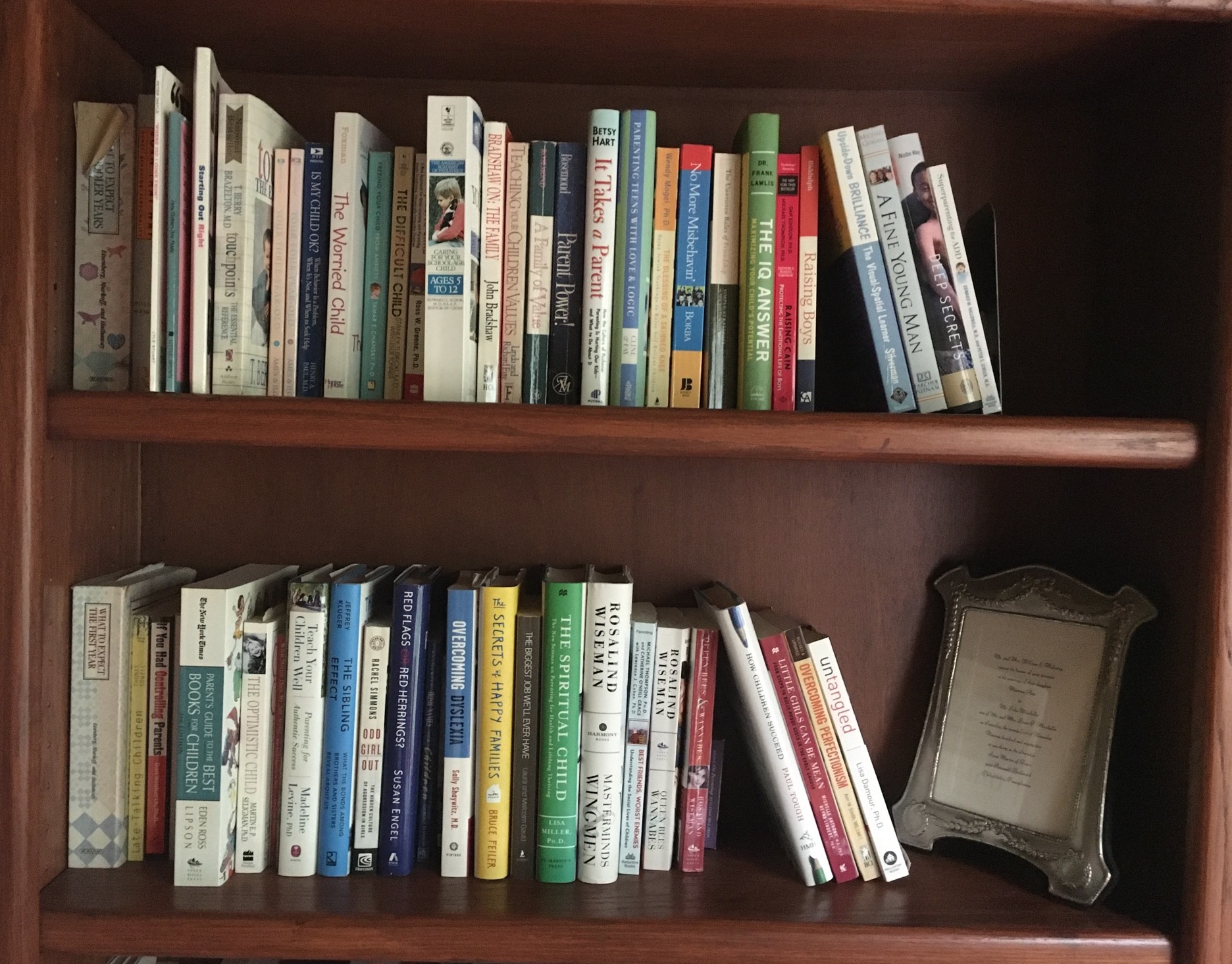
I am a BIG fan of experts and researchers. I think they’re invaluable resources offering data points and insights that I, for one, have read, reflected on and, when appropriate, incorporated to some degree into my parenting. (Influencers and TicTokers were after my time, thank God.) But I do think, taken too seriously, the counsel doled out by these authorities can do a disservice to young parents, who may not have the confidence or context to disregard the parenting advice du jour out of fear that they will seriously harm their kids.
But, to the Extent They Suggest There is a “Right” Parenting Style, They’re Misleading.
There is no one right way to parent. And if there were, no one else could tell you what it was. It would well up out of the unique, intimate relationship you have with each of your individual children. Each of them is different, and the dynamic you have with each of them is different. And they – and you – are changing all the time. No one expert-prescribed parenting style or practice could possibly be expected meet all of those varied and evolving demands.
Max, as I mentioned, is sensitive and thoughtful and self-controlled. A word to her is sufficient, so I could afford to be a little permissive. Scout and Tiggs sometimes didn’t hear me until the windows were rattling. My kids with ADHD needed a lot more structure and authoritative parenting than my kids without. While I was always available to give guidance, when a child was dealing with something I knew they could manage on their own, I tried to stay uninvolved. And when Tiggs’ high school refused to give him the ADHD accommodations they had promised, I’m sure I was perceived as a helicopter parent.
You Would be Better Served to Stay Informed About the Wide Variety of Tools and Tactics Out There and Use What Feels Right in the Moment.
Of course, as parents you can and absolutely should make broad stroke decisions setting the practices and expectations for your children and households, especially when it comes to values. To have a secure childhood, your kids need to know that someone’s captaining this ship and it ain’t them.
Beyond the big picture, though, so much of what we do as moms is about meeting the parenting moment. Rather than adopting or trying to identify with a “style” of parenting, I think you’ll find it much more useful to stay informed about all options that are out there to meet that moment. Put yourself in ongoing learning mode. Listen to podcasts and experts and blog posts and older moms. Mostly older moms, who have no hesitation whatsoever to tell you when an “expert” is full of crap. Gather together as many tools and tactics and practices as you can to manage those moments – from as many “styles” as speak to you.
Then pay close attention to the individual you’re parenting and, when an issue comes up, use which ever tools feel right at the time. Trust yourself. Turns out, it’s a lot harder to mess up your kids than you think. Trust me. I was raised in the 60’s on the edge of Philadelphia.
When Max needed a little redirection, a few minutes of quiet conversation almost always did the trick. Tiggs, on the other hand, believed it was better to be wanted by the sheriff than not at all. For him, attention guaranteed a repeat performance, so time outs were more effective. Scout quite liked sitting on the step, wandering through her thoughts. An act of service to the offended party usually brought the message home for her.
I didn’t worry about which style I was pulling from. I just focusing on the best way to get my message through to the particular child I was dealing with at the particular moment they needed that message.
And You Will be a Better Parent if You Ditch the Guilt That Can Come with a Parenting Style That You Can’t Authentically Inhabit.
Throughout most of history, the word generally used to describe the years-long interaction between parent and child was “childrearing.” The focus was on the child and the whole goal was to get that kid through to whatever age society deemed “adulthood” as unscathed and morally competent as means allowed.
It wasn’t until the mid-70’s that the word “parenting” came into common parlance as a verb, shifting the emphasis away from raising a certain kind of person and toward being a certain kind of parent. That’s a lot of pressure. And it can breed a lot of guilt if your personality or partnership or circumstances don’t allow you to easily inhabit the parenting style of the day.
I don’t think any of us needs any more of either.
Because, Ultimately, Parenting isn’t About Style; it’s About Authentic Connection.
When you really sit with it, the whole concept of a “parenting style” is just kind of bizarre. As if “parent-you” is somehow different from “you-you.” Something you craft and put on when you’re with your kids to project a version of yourself that’s curated for their benefit. If that comes at the cost, even slightly, of the authentic connection we’re hoping to foster between ourselves and our kids – and authentic connection is what our kids truly need and crave – maybe we should rethink it.
I don’t have a “wife style” or a “friend style” or a “neighbor style.” I bring my authentic self into those relationships and hope to meet authenticity in return. Why would I give anything less to my kids?
So, I shifted my thinking. I decided to work on my temper – and I continue to work on my temper – not because I needed to be a better parent but because I need to be a better person. And I decided that if raised voices or sharp tones were what surged up out of me on occasion, that’s going to have to be ok. For better or worse, it’s part of who I am, and I’d rather my kids genuinely know who I am – even if that requires a little more forgiveness.
Once I’d reflected, I circled back to Max. I apologized. She forgave me. She decided she would like to live with us after all. Tears were shed. And I asked Max, “The Bartniki girls. What are they like?”
“Mom, they’re like one of the nicest families in school,” she said.
“Polite nice? Surface nice? Or really, sincerely nice?”
“No, they are totally genuine and sincere. You would love them.”And, as Max and I hugged and made things right between us, I thought, yep. They yell.